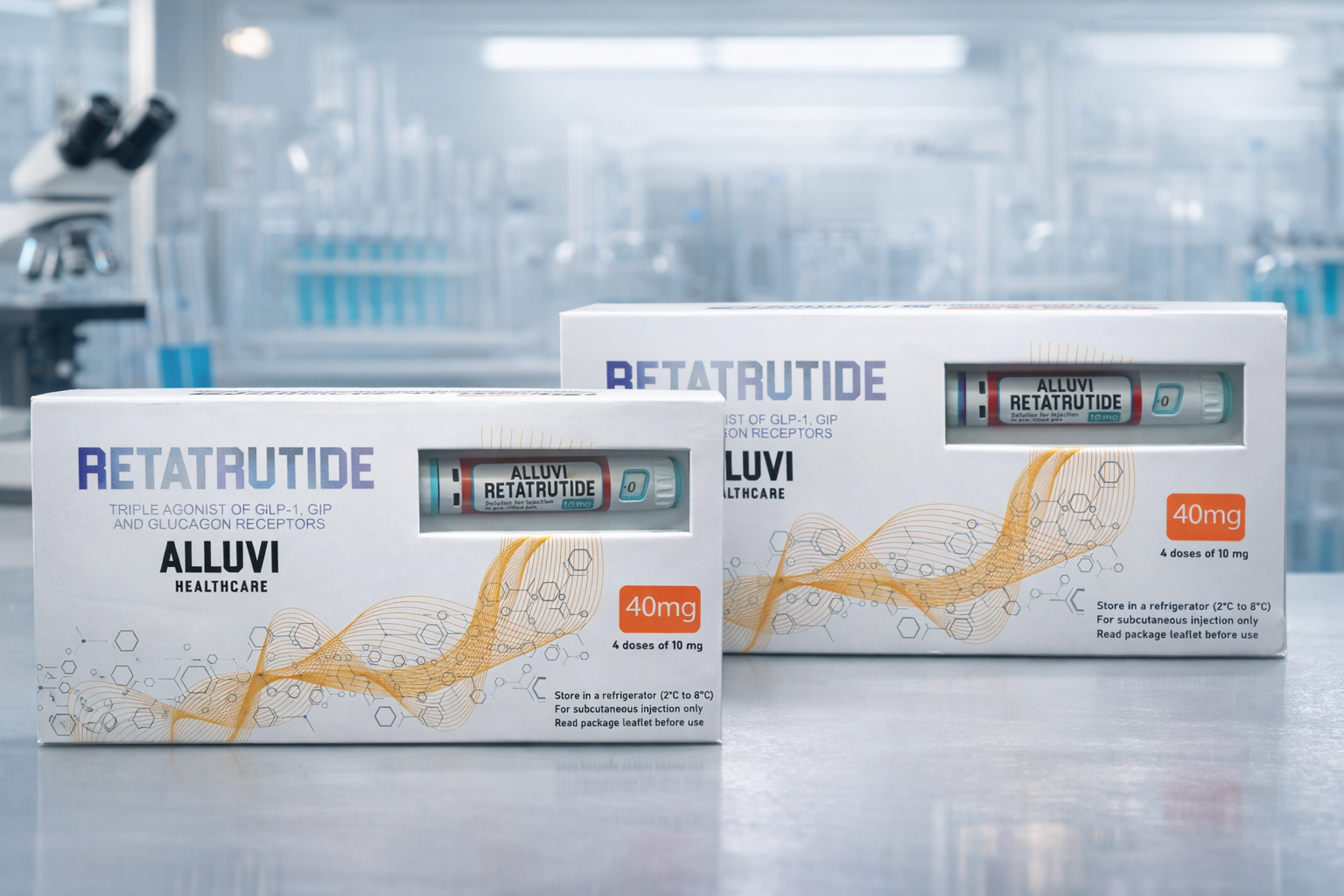
Molecular Architecture: Dual vs Triple Agonism
Understanding the structural differences in the retatrutide vs tirzepatide uk debate is essential for metabolic receptor research. Tirzepatide is a primary dual GIP and GLP-1 receptor agonist, synthetically modeled as a 39-amino-acid linear peptide. Retatrutide, however, introduces a third metabolic trigger, targeting the glucagon (GCG) receptor alongside GIP and GLP-1 targets, which significantly alters mitochondrial oxidation profiles in-vitro.
Receptor Activation Comparison Matrix
Research has shown that triple agonists exhibit distinct cellular pathways that must be heavily factored in during comparative modeling assays.
| Agonist Profile | Tirzepatide (Dual) | Retatrutide (Triple) |
|---|---|---|
| GLP-1 Receptor Affinity | High | Moderate to High |
| GIP Receptor Affinity | Very High | High |
| Glucagon GCG Affinity | None | Moderate (Active) |
| In-Vitro Lipolysis Focus | Moderate | Extremely High (Via Glucagon pathway) |
| Molecular Formula | C225 H348 N48 O68 | C221 H342 N46 O68 S2 |
Key Differences in Stability and Reconstitution
Because of its third peptide binding loop, Retatrutide is slightly more structurally sensitive than Tirzepatide. It requires extraordinarily gentle dilution using cold Bacteriostatic Water to avoid premature breakdown of the delicate disulfide bridges.
Never shake any peptide solution. Aggressive agitation destroys the tertiary shape of both Tirzepatide and Retatrutide, rendering them completely inactive for cell tissue receptor studies.